
The Egyptian Museum and Its Secrets
This activity is only offered in Catalan and Spanish.
Pre-school education (I3, I4 and I5)
From September to June, Monday to Friday.
Visit and workshop activity.
Minimum group size for the activity: 10 students. Maximum group size: 25 students.
Two workshops can be held simultaneously.
Activity languages:
Catalan - Spanish
Price: €8.50 per student (accompanying adults free, up to a maximum of 3 per group)
Duration: 1 hour 30 minutes
You can book through the website or by sending an email to visites@museuegipci.com
The little ones at the museum.
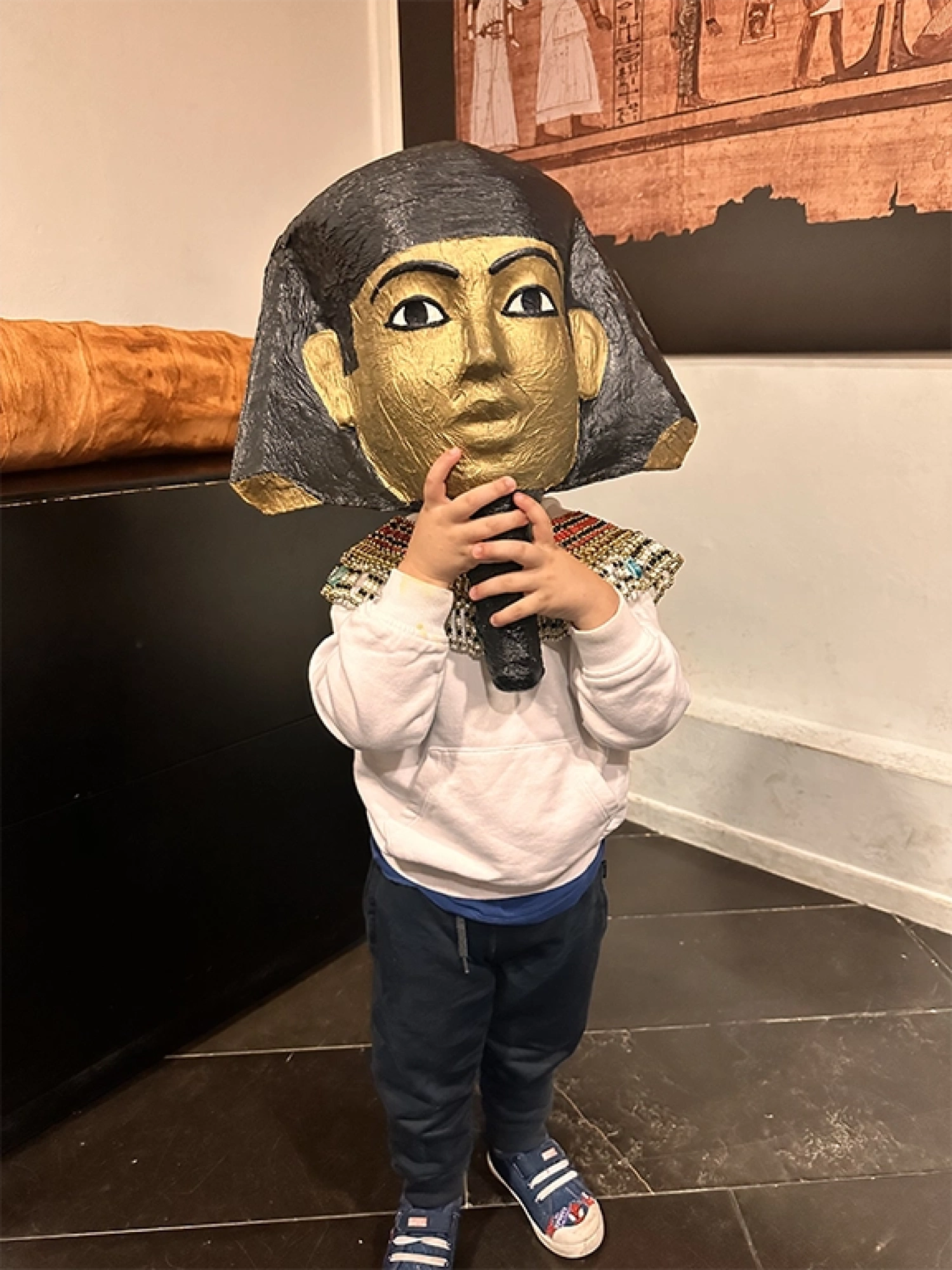
The little ones discover the mysteries of pharaohs and mummies: crowns, scepters, sacred animals and other magical objects full of stories.
In a participatory and visual way, children will delve into a world full of colors, shapes, and symbols, where each part of the museum hides a secret to discover. The route ends at Nakht's tomb, which holds a fun surprise that awakens the curiosity and imagination of the little ones. To finish, participants take part in a small workshop that allows them to experiment and express everything learned during the visit.
An experiential, playful, and educational proposal that brings the world of Ancient Egypt closer to young children in an attractive and adapted way.
Informació curricular
Objectives
Discover the Egyptian Museum as a space filled with objects and stories
Learn about the main elements of ancient Egyptian culture (pharaohs, mummies, symbols)
Encourage curiosity, observation, and active participation
Foster respect for cultural heritage
Express and share experiences and emotions through the final artistic activity
Teaching Methodology and Educational Resources
Participatory activities with explanations adapted to the group
Guided observation of museum objects and materials
Discovery and observation game to encourage attention and curiosity
Final workshop using simple materials for artistic creation
Dialogue and oral expression based on open-ended questions
Competences (ESD)
Development of observant and critical thinking.
Intercultural awareness and respect for other cultures.
Appreciation of cultural and historical heritage.
Cooperative work and peer communication.
Key Competencies
Communication and expression competence.
Collaboration competence.
Self-awareness and emotional regulation competence.
Initial critical thinking competence.
Experiential and creative learning competence.
SDGs addressed
SDG 4: Quality education.
SDG 11: Sustainable cities and communities (cultural heritage).
SDG 16: Peace, justice and strong institutions (cultural diversity and values).
Areas of knowledge by level
Early Childhood Education
Discovering oneself and others
• Active participation in group activities
• Expression of sensations and emotions through observing the surroundings
• Respect and care for cultural spaces, heritage, and artworks
Exploring the natural and social environment
• Observation and identification of elements typical of another culture
• Experiential understanding of museums as places to learn and discover
Communication and languages
• Listening comprehension and participation in guided conversations
• Creative expression through creation and hands-on activities
• Use of basic vocabulary related to Ancient Egypt (pharaoh, mummy, tomb…).
Art education
• Creation of an element inspired by the shapes, symbols, and colors of the Egyptian world
• Experimentation with different materials and artistic techniques