
Guided Tour of the Egyptian Museum
Primary, ESO, baccalaureate and vocational training.
From September to June, Monday to Friday.
Visit activity.
Minimum group size for the activity: 10 students. Maximum group size: 30 students.
Two visits can be held simultaneously.
Activity languages:
Catalan - Spanish - English
Price: €5 per student + €35 per class group for the specialized guide service (€42 in English) (accompanying adults free, up to a maximum of 3 per group).
Duration: 1 h
You can book online, by calling 93 488 01 88 or by sending an email to visites@museuegipci.com
Come and discover the collection of the Egyptian Museum.
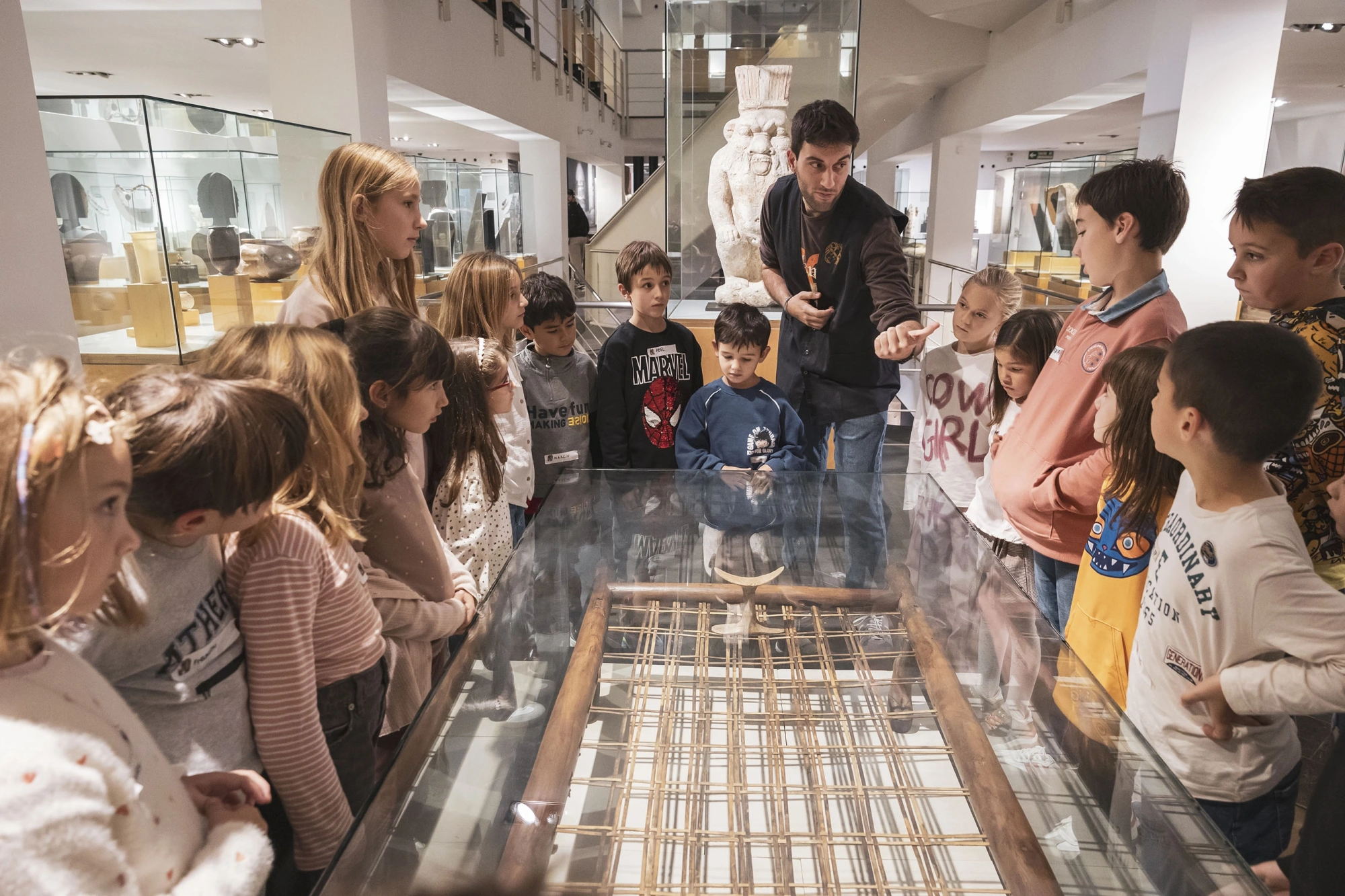
Accompanied by one of our guides, students take a guided tour of the permanent collection at the Egyptian Museum of Barcelona, where they will learn about the main features of pharaonic civilization.
During the tour, topics covered include the figure of the pharaoh and social organization, the funerary world and mummies, art and craftsmanship, Egyptian myths and gods, as well as the religious and magical beliefs that defined life and death in Ancient Egypt.
The activity promotes reflection, observation, and historical thinking through direct contact with original objects and primary and secondary historical and archaeological sources, fostering active learning and respect for cultural heritage.
Curriculum information
Objectives
Understand the fundamental aspects of Ancient Egyptian civilization.
Recognize the importance of the pharaoh, society, and religious beliefs.
Identify key elements of art, rituals, and the funerary world.
Foster critical observation of historical artifacts.
Value the museum as a space for knowledge, conservation, and learning.
Teaching Methodology and Educational Resources
Guided tour led by an Egyptology specialist.
Oral explanations adapted to the group’s educational level.
Direct observation of objects and pieces from the permanent collection.
Open dialogue and active participation by students.
Visual support and historical contextualization.
Competencies (ESD)
Historical and critical thinking.
Intercultural knowledge.
Respect for cultural and religious diversity.
Appreciation of cultural and historical heritage.
Cooperative work and communication in an educational context.
Key Competencies
Anticipation competence.
Strategic competence.
Collaboration competence.
Systemic and critical thinking competence.
Self-awareness competence.
Competence integrated into problem solving.
SDGs addressed
SDG 4: Quality Education (cultural and historical knowledge).
SDG 11: Sustainable Cities and Communities (preservation of heritage).
SDG 16: Peace, Justice and Strong Institutions (respect for cultural diversity).
Areas of knowledge by level
Primary
Knowledge of the social and cultural environment
• Ancient civilizations: Egypt.
• Pharaohs, gods and daily life.
• Museums as sources of knowledge and conservation.
Art education
• Observation of shapes, colors and symbols in Egyptian art.
• Magical and symbolic appreciation of artworks.
Catalan/Spanish language
• Oral comprehension and participation in guided conversations.
• Expression and formulation of questions about what is observed.
Secondary (E.S.O)
Social Sciences, Geography and History
• Pharaonic Egypt: society, government and religion.
• Documents, written history and archaeology as a science.
• Interrelation between culture, art and religion.
• Primary and secondary sources.
Ethics and Citizenship Education
• Reflection on cultural diversity and the interpretation of the past.
• Appreciation of coexistence and respect for other ways of thinking.
• Persistence of traditions and the origins of our present culture.
Visual and Plastic Education
• Symbolic and formal analysis of Egyptian art.
• Relationship between form, function and meaning.
Baccalaureate
History of the Ancient World / Art History
• Pharaonic Egypt as a model of a complex civilization.
• Analysis of artistic and religious manifestations.
• Archaeological heritage and conservation issues.
• Historical hypotheses based on archaeological remains and written sources.
Philosophy and Religion
• Reflection on beliefs and the conception of existence.
• The role of religion in ancient civilizations.
Cross-curricular competences
• Critical thinking, autonomy in learning and cultural appreciation.
• Persistence of traditions and the origins of our present culture.