

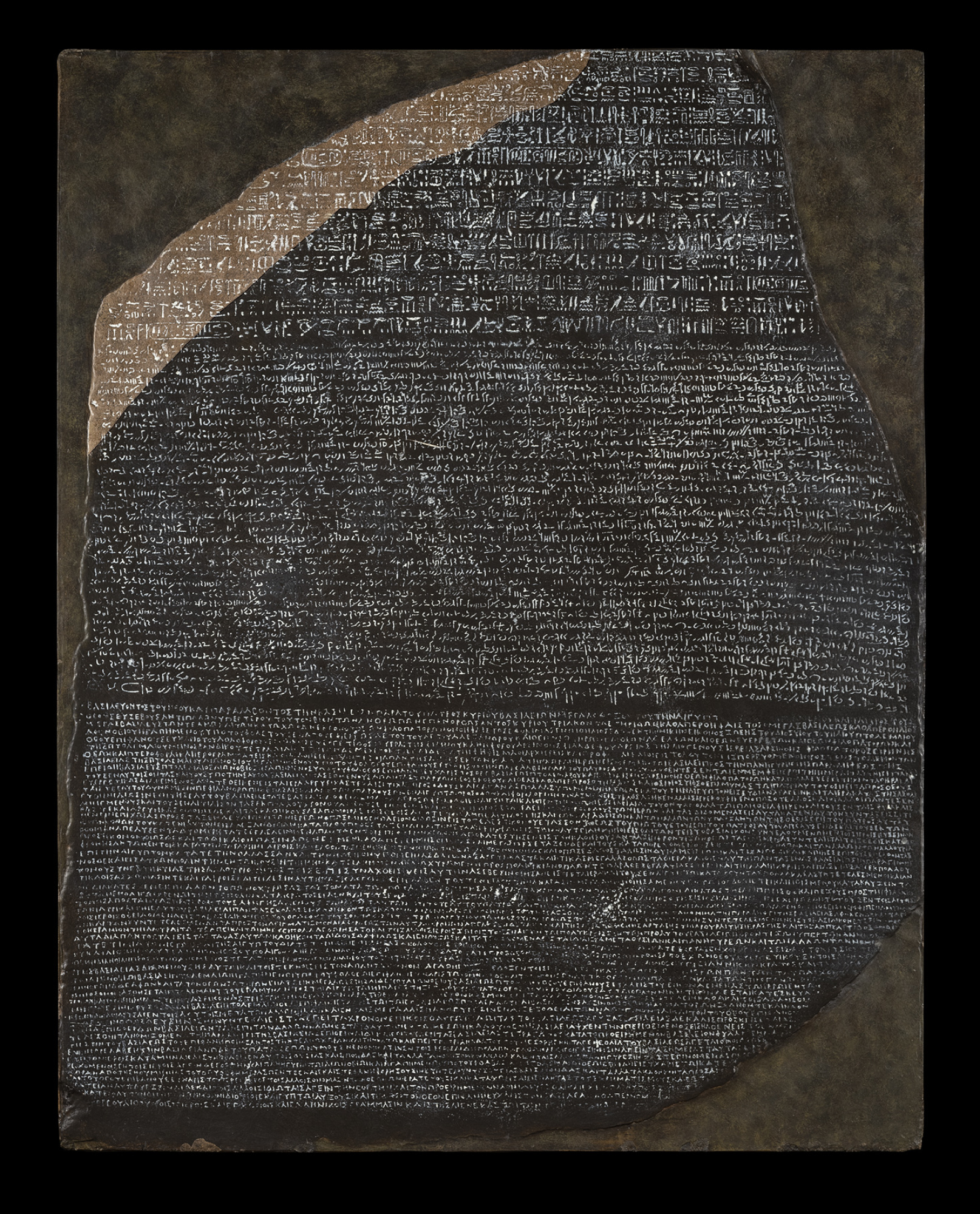
Rosetta Stone (copy)
Late 19th century
Painted plaster
Height: 95 cm
Inv.: MEB ER-2
The texts on the Rosetta Stone, written in three different scripts, reflect the situation of Ptolemaic Egypt: a country under the protection of traditional gods (hieroglyphic text), inhabited by a majority of native Egyptians (demotic text) and a minority of foreign origin (Greek text). Three scripts for the same text: a decree promulgated at Memphis in the ninth year of Ptolemy V (196 BC) that announced a reduction of taxes affecting the army and especially the temples. The comparison of the hieroglyphic and Greek texts, particularly the signs used to write the name Ptolemy in both versions, was the key that led Jean-François Champollion to the breakthrough that culminated in the brilliant decipherment of hieroglyphic writing, officially published in 1822.